

Aging and Hearing Loss
Helping Older Adults Stay Connected Through Better Hearing and Healthier Aging
Age-related hearing loss, or presbycusis, is a common condition that can affect communication, social engagement, and quality of life. Because it often develops gradually, many people may not notice hearing difficulties until they begin to interfere with daily activities.
The Philippine National Ear Institute (PNEI) provides comprehensive evaluation, diagnosis, and management of age-related hearing loss. Through expert care, hearing rehabilitation, and patient education, we help older adults maintain communication, independence, and overall well-being.
Aging and Hearing Loss Program
The Philippine National Ear Institute (PNEI) provides comprehensive services for older adults experiencing age-related hearing changes. The program focuses on the prevention, early detection, diagnosis, treatment, rehabilitation, and education related to hearing loss associated with aging, commonly known as presbycusis. PNEI recognizes that hearing health is essential to maintaining communication, independence, social engagement, and quality of life among older Filipinos.
Comprehensive Hearing Assessment for Older Adults
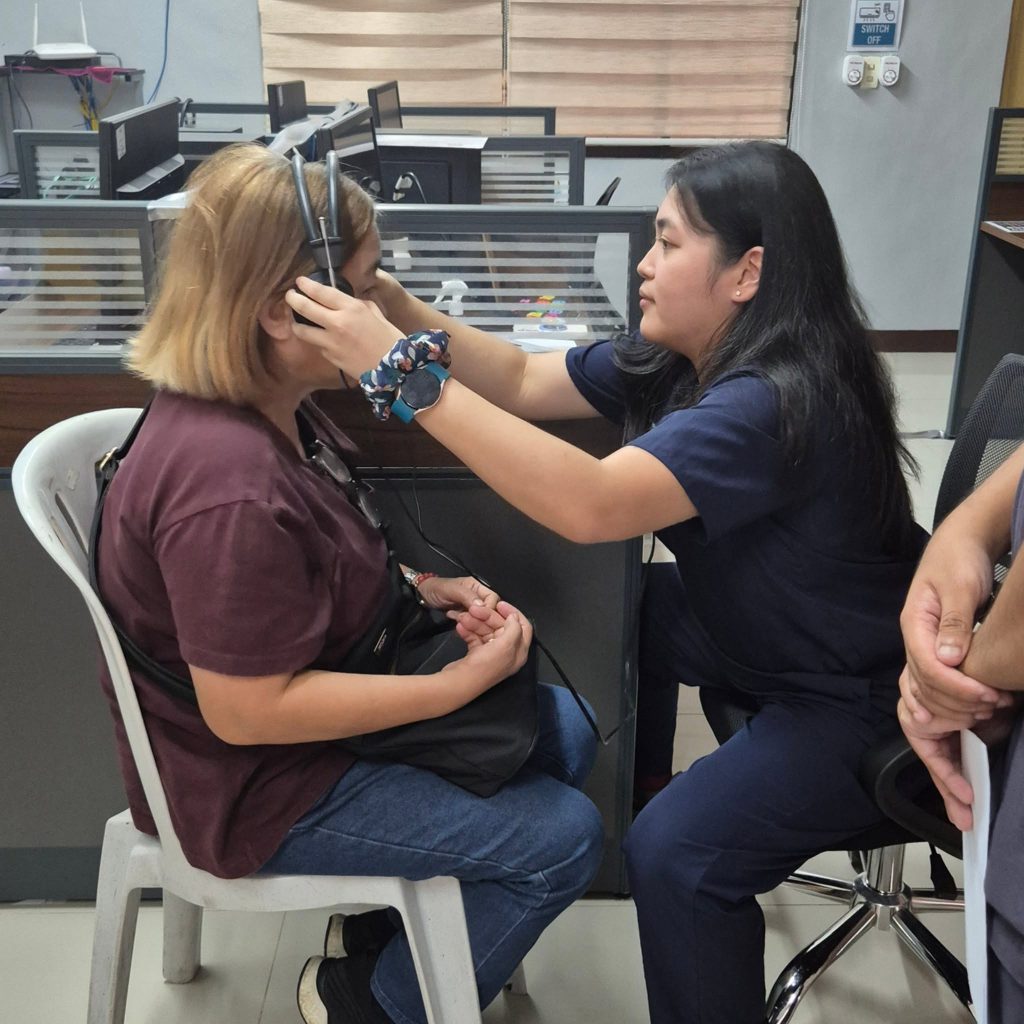
PNEI offers specialized audiologic evaluations designed to identify age-related hearing loss and distinguish it from other ear disorders. Services include:
- Pure-tone audiometry
- Speech audiometry
- Tympanometry and acoustic reflex testing
- Otoacoustic emissions (OAE)
- Auditory brainstem response (ABR) and other electrophysiologic tests when indicated
- Vestibular and balance assessment for older adults experiencing dizziness or falls
- Hearing aid assessment and aided hearing testing
These diagnostic services help determine the type and severity of hearing impairment and guide individualized management plans.
Early Detection and Hearing Surveillance
Research conducted through PNEI has demonstrated that hearing thresholds, particularly at higher frequencies, may begin to decline well before old age and become increasingly significant among adults aged 60 years and above. PNEI therefore promotes routine hearing evaluation for older adults to facilitate early detection and intervention before communication difficulties become severe.
Program activities include:
- Referral for further diagnostic evaluation and rehabilitation
- Hearing screening for older adults
- Monitoring of age-related hearing changes
- Identification of individuals at risk for communication difficulties
Hearing Rehabilitation and Assistive Technology
For individuals diagnosed with hearing loss, PNEI provides rehabilitation services that may include:
- Hearing aid evaluation and fitting
- Hearing aid verification and follow-up care
- Assistive listening device assessment
- Cochlear implant evaluation when appropriate
- Counseling for patients and family members
- Communication strategy training
These interventions help older adults remain socially connected, maintain independence, and reduce the impact of hearing impairment on daily activities.
Balance and Fall-Risk Assessment
Because hearing loss and balance disorders frequently occur together in older adults, PNEI also offers vestibular assessment services, including:
- Video Head Impulse Testing (vHIT)
- Vestibular Evoked Myogenic Potentials (VEMP)
- Videonystagmography (VNG)
These evaluations help identify balance disorders that may contribute to dizziness, instability, and falls among elderly patients.
Education and Healthy Aging Initiatives
PNEI promotes healthy hearing throughout the lifespan through patient education and community outreach. Educational initiatives focus on:
- Understanding age-related hearing loss
- Recognizing early warning signs of hearing impairment
- Communication strategies for patients and caregivers
- Safe listening practices
- Hearing aid use and maintenance
- Prevention of additional hearing damage from noise exposure and medical risk factors
These activities aim to encourage older adults to seek care early and remain actively engaged in their communities.
Research and Advocacy
As the country’s leading hearing research institution, PNEI continues to study hearing health across different age groups and advocates for the inclusion of hearing services within universal healthcare. Research findings have highlighted the importance of expanding hearing surveillance and hearing care services for the elderly population, which remains an underserved sector of healthcare.
The Aging and Hearing Loss Program aims to:
- Detect age-related hearing loss as early as possible
- Improve communication and quality of life among older adults
- Promote healthy aging through hearing preservation
- Reduce social isolation associated with hearing impairment
- Enhance access to hearing rehabilitation services
- Support caregivers and families through education and counseling
- Advance research and policy development in geriatric hearing health
Through clinical care, rehabilitation, education, research, and advocacy, PNEI seeks to help older Filipinos maintain meaningful communication and active participation in society as they age.
Enquiry
Have questions about our clinical services or training programs?
Whether you are seeking hearing and balance diagnostic services, professional training, certification courses, observership opportunities, or educational partnerships, the Philippine National Ear Institute (PNEI) is here to help. Send us your inquiry and our team will guide you to the appropriate service or program.