


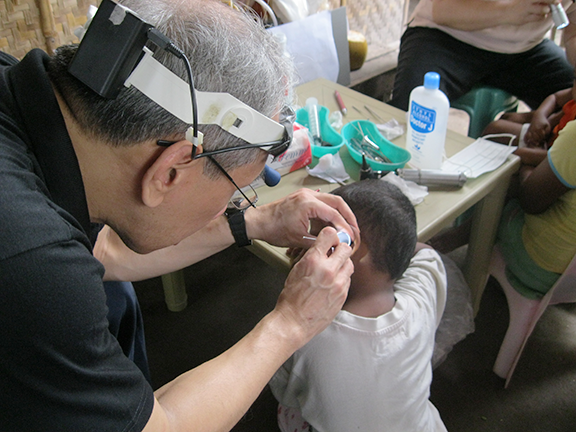
The Philippine National Ear Institute (PNEI) provides comprehensive hearing, balance, speech, and language assessment services for children and adults.
Clinical Services
The Philippine National Ear Institute (PNEI) provides comprehensive diagnostic, assessment, and rehabilitative services for individuals with hearing, balance, speech, and language concerns. Our multidisciplinary team utilizes state-of-the-art technology and evidence-based practices to deliver high-quality patient care across the lifespan. Through specialized hearing and vestibular evaluations, hearing device services, and speech and language assessments, PNEI is committed to improving communication, promoting ear and hearing health, and enhancing quality of life for our patients and their families.
Training and Education
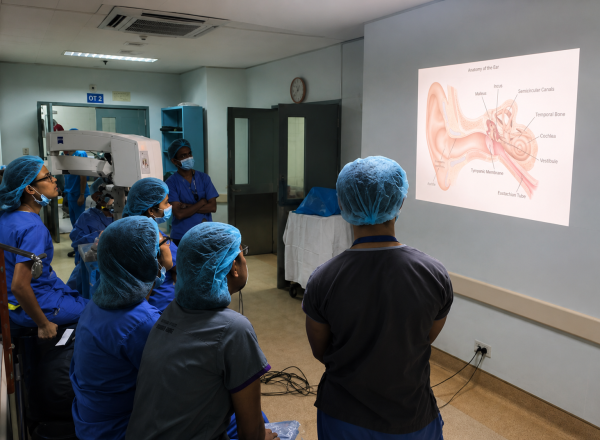
The Philippine National Ear Institute (PNEI) is committed to advancing ear, hearing, balance, speech, and language healthcare through education, training, and capacity building. We offer a range of learning opportunities for healthcare professionals, students, educators, and community workers, including workshops, certification courses, clinical training, observerships, and continuing professional development programs. Through innovative teaching, simulation-based learning, and interdisciplinary collaboration, PNEI aims to develop a highly skilled workforce dedicated to improving hearing and communication outcomes across the Philippines.
Philippine National Ear Institute Services
Offering specialized diagnostic, therapeutic, rehabilitative, and educational services through a multidisciplinary team dedicated to improving hearing health and
quality of life.
Puretone Audiometry Speech Test
This test determines your hearing threshold.
Tympanometry
Test used to evaluate the health and function of the middle ea
Stapedial Reflex
Charts the lowest sound level needed to trigger this contraction
Stapedial Reflex Delay
Measuring the physical time gap before the muscle starts contracting.
Acoustic Reflex
Automatic, involuntary contraction of the tiny stapedius muscle in your middle ear when you are exposed to high-intensity sounds.
Play Audiometry
Specialized behavioral hearing test designed for toddlers and preschoolers, typically aged 2 to 5 years old.
Cold/Hot Calorics
Diagnostic medical procedure used to evaluate the function of the peripheral vestibular (balance) system.
Otoacoustic Emmissions (DPOAE or TOAE)
microscopic, involuntary acoustic sounds generated directly by the outer hair cells within the cochlea of the inner ear.
SISI / TDT
Specialized behavioral hearing tests used to differentiate between cochlear (inner ear) and retrocochlear (auditory nerve) hearing disorders.
Cortical Auditory Evoked Potential (CAEP)
Electrophysiological measure that tracks how the auditory cortex responds to sound.
Brainstem Evoked Response Audiometry
Electrophysiological test that measures how the auditory nerve and brainstem pathways respond to sound.
Videonystafmography (VNG) Complete
Comprehensive battery of tests used to evaluate patients suffering from dizziness, vertigo, or balance disorders.
Video Head Impulse Test (VHIT)
Advanced diagnostic balance test that measures the Vestibulo-Ocular Reflex (VOR).
Vestibulo Evoked Myogenic Potential (VEMP)
Neurophysiological test used to evaluate the function of the otolith organs (the saccule and utricle) in the inner ear and their associated nerve pathways.
Speech Aided
Evaluates a person’s ability to hear, clear clarity, and understand spoken words while wearing their hearing devices.
Hearing and Noise Test (HINT)
Adaptive speech discrimination test used to measure an individual’s ability to hear and understand sentences in both quiet environments and competing background noise.
Electrocochleaography
Objective electrophysiological test that measures the electrical potentials generated by the inner ear (cochlea) and the auditory nerve in response to sound.
ASSR
Objective, electrophysiological hearing test used to automatically estimate pure-tone hearing thresholds in infants, young children, and uncooperative adults.
Tinitus Matching
Behavioral audiological procedure used to determine the exact pitch (frequency) and volume (loudness) of a patient’s subjective phantom ear ringing.
Automated Auditory Brainstem Response (AABR)
Rapid, automated objective screening tool used exclusively to detect infant hearing loss within the first few days of life.
Interested in Training with the Philippine National Ear Institute?
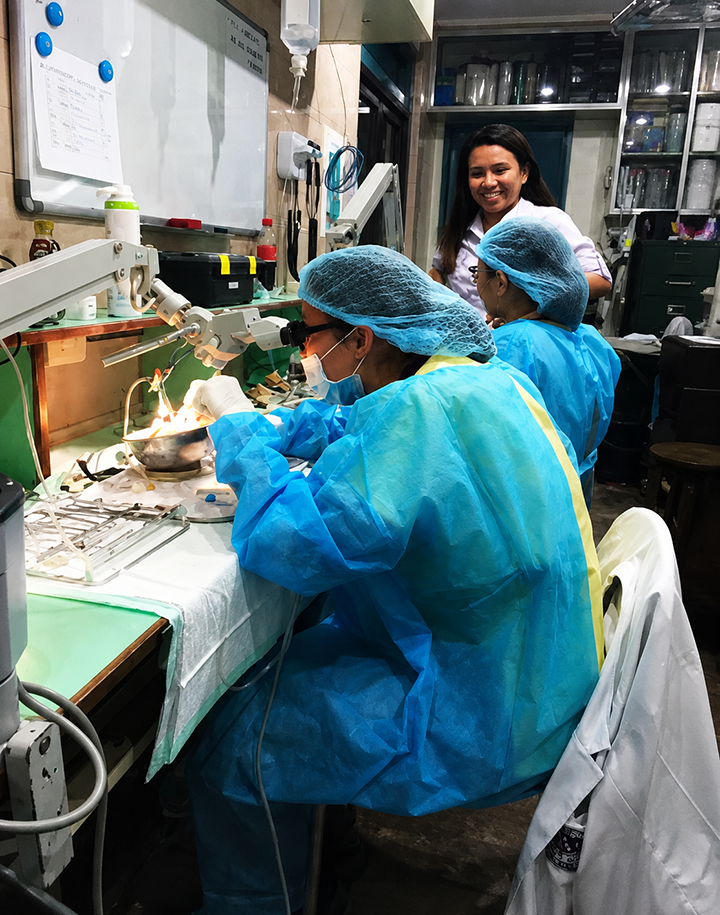
We welcome inquiries from healthcare professionals, students, institutions, and organizations interested in our training and educational programs. Complete the form below to learn more about upcoming courses, workshops, observerships, and specialized training opportunities in hearing, balance, speech, and ear health. Our team will get in touch with you to discuss available programs and registration details.
Get in Touch
PHILIPPINE NATIONAL EAR INSTITUTE
2nd Floor Central Block, Philippine General Hospital, Taft Avenue, Ermita Manila 1000
Tel No. 8554-8400 loc. 2072
Mobile No. 0919-095-8450
earunit@post.upm.edu.ph / nih.pnei.upm@up.edu.ph
https://www.facebook.com/PNEI.NIH
- Monday – Friday : 10:00AM – 6:00PM